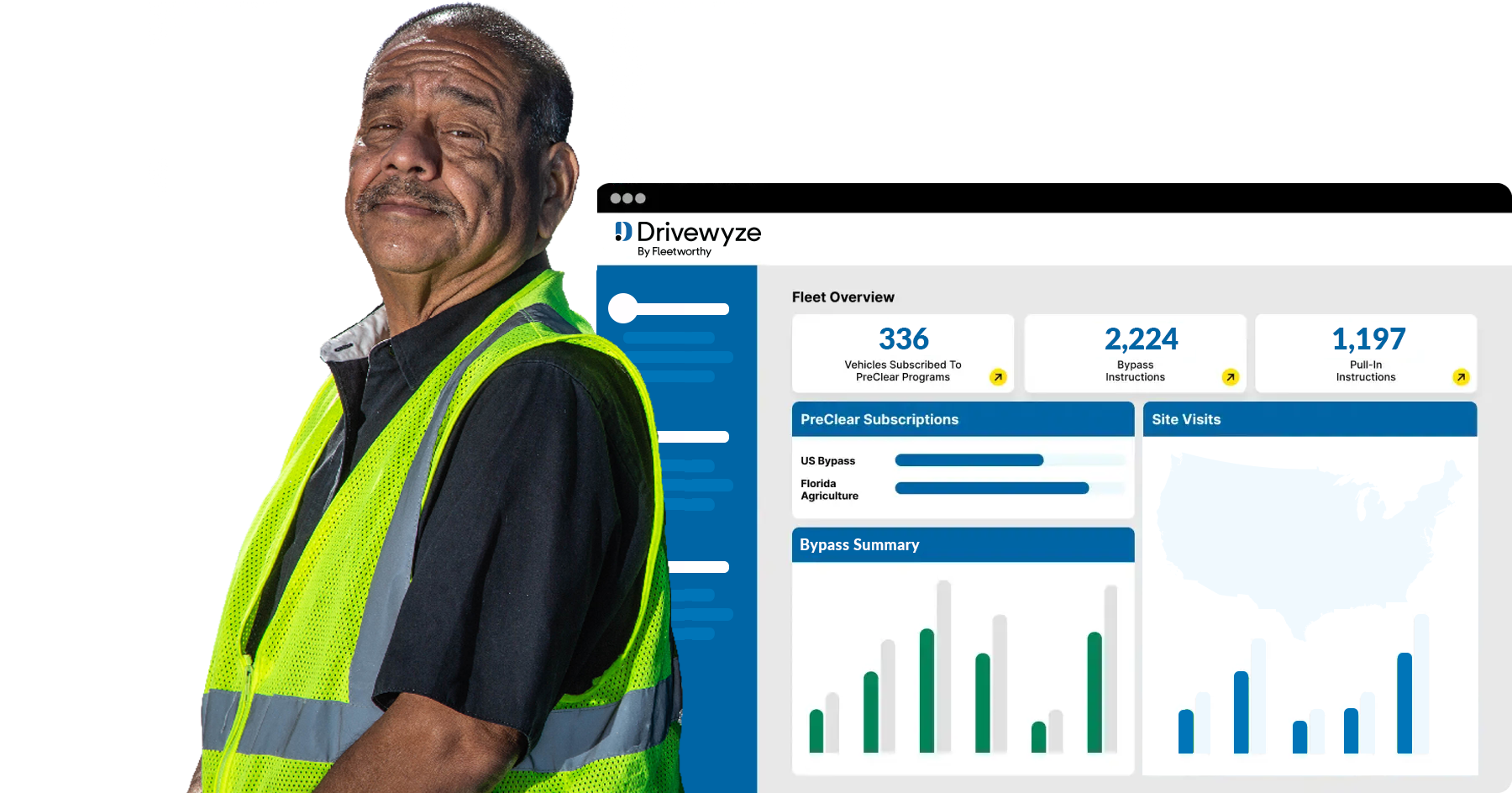

From missed inspections and speeding citations to Hours of Service (HOS) infractions, fleet violations can quickly add up, impacting not only your fleet’s CSA (Compliance, Safety, Accountability) scores but also your bottom line, insurance premiums, and company reputation.
What’s driving this increased concern? Stricter enforcement, rising freight volumes, and a shortage of experienced drivers have made it harder for fleets to maintain clean records. At the same time, customers and regulators alike are placing greater emphasis on safety, accountability, and performance metrics.
While some violations are inevitable, many are preventable with the right tools and approach. Rather than relying solely on post-incident training or manual compliance checks, forward-thinking fleets are embracing proactive violation prevention strategies, powered by modern technologies, real-time driver insights, and automated safety systems.
In this article, we’ll explore proven strategies that help fleets stay ahead of violations, reduce risk exposure, and build a culture of safety. Whether you’re managing five trucks or five thousand, these tactics can help ensure your fleet remains both compliant and protected, mile after mile.
Understanding Fleet Violations
Fleet violations aren’t just occasional administrative slip-ups, they’re key indicators of risk, inefficiency, and compliance gaps. Understanding what causes these violations, and their downstream effects, is the first step in building a safer, more resilient operation.
A. Common Types of Violations
1. Hours of Service (HOS) Violations
These are among the most frequently cited violations by enforcement agencies. HOS violations occur when drivers exceed allowable drive time, fail to take required breaks, or don’t accurately log their hours in electronic logging devices (ELDs).
Why it matters: Repeated HOS violations raise red flags with the FMCSA, impact your CSA scores, and increase the likelihood of audits and interventions.
2. Inspection and Maintenance Violations
Poor vehicle upkeep or missed inspections can lead to violations for brake issues, lighting problems, worn tires, and more. These violations often emerge during roadside inspections or weigh station stops.
Why it matters: Maintenance-related violations can lead to out-of-service orders, unexpected downtime, and major safety hazards.
3. Speeding and Traffic Infractions
Drivers who exceed speed limits, especially in designated work zones or high-risk areas, face citations that count heavily against a fleet’s safety profile.
Why it matters: Speeding violations not only threaten safety but also increase the severity of accidents and insurance costs.
4. Bypass Non-Compliance or Weigh Station Issues
Failure to stop at required weigh stations or improper use of bypass technology can result in citations and increased scrutiny from enforcement agencies.
Why it matters: Violations here can signal a lack of operational discipline and erode the trust of regulators, particularly if patterns emerge.
B. Impact on Fleets
1. CSA Scores and Safety Ratings
The FMCSA’s CSA program uses data from inspections, crashes, and violations to assign safety scores. Poor scores can lead to audits, intervention, and lost business, especially from safety-conscious shippers.
Bottom line: A few recurring violations can damage your fleet’s reputation and lead to tighter oversight.
2. Insurance Premiums
Insurers closely monitor violation trends. Fleets with poor compliance records often face higher premiums, or may even struggle to secure coverage.
Bottom line: Preventing violations helps control insurance costs and improves your risk profile.
3. Driver Morale and Retention
When drivers feel unsupported or constantly face violations, especially ones that could have been prevented with better tools, it leads to frustration, low morale, and high turnover.
Bottom line: A strong safety culture supported by real-time technology shows drivers their safety is a priority.
4. Operational Delays and Lost Revenue
Violations can trigger roadside delays, inspections, and out-of-service orders, all of which result in late deliveries and lost productivity.
Bottom line: Every minute your truck is sidelined for a violation is revenue lost and customer trust eroded.
Core Strategies for Fleet Violation Prevention
Preventing violations requires more than just driver training or reactive measures. The most effective fleets take a proactive, tech-enabled approach, using real-time tools, automation, and data to stay ahead of risk. Below are four strategic pillars to help prevent violations before they happen.
A. Use of Real-Time Safety Tools
In-Cab Alerts for High-Risk Zones, Speed Zones, Work Zones, and More
Drivers are constantly navigating dynamic road conditions, from sharp curves and steep grades to sudden slowdowns and active construction areas. Traditional signage alone isn’t enough to prepare them. With real-time, location-based alerts, fleets can deliver timely warnings directly into the cab, helping drivers anticipate hazards and reduce violations like speeding, sudden braking, or unsafe lane changes.
Integration with ELDs and Telematics
The key to effective alerts is seamless delivery through the systems drivers already use. By integrating with major ELD and telematics platforms, Drivewyze ensures alerts are easily adopted and consistently delivered, without additional hardware or driver input.
B. Proactive Driver Coaching
Addressing Risky Behavior Before It Leads to Violations
Waiting until a violation occurs to address risky behavior is too late. Proactive coaching based on real-time driving data allows fleet managers to intervene early, correcting patterns like hard braking, speeding, or bypass failures before they escalate.
Early intervention supports compliance and builds trust with drivers.
C. Automated Compliance Support
Electronic Pre-Clearance at Weigh Stations with Drivewyze PreClear
Stopping at weigh stations increases the risk of violations due to inspections, delays, and paperwork errors. Drivewyze PreClear enables qualified trucks to bypass weigh stations electronically, reducing the number of inspection events and the chance of being cited.
Bypasses also save time and fuel while keeping compliant trucks moving.
e-Inspections to Reduce Roadside Delays and Inspection Risk
With Drivewyze e-Inspection, fleets can participate in electronic inspections that transmit required data to enforcement agencies remotely.
This helps speed up inspection processes, avoid manual paperwork, and lower the chance of inspection-triggered violations.
D. Data-Driven Monitoring
Using Safety Analytics Dashboards to Identify Trends and Gaps
Access to centralized, real-time data allows safety and compliance teams to spot patterns in violations, identify high-risk drivers or routes, and make data-backed decisions to reduce exposure.
Tools like Drivewyze Safety+ offer dashboard views of safety alert engagement, incident trends, and location-specific risk.
Reporting and Benchmarking Across Driver Segments
Detailed reporting helps you benchmark safety performance across terminals, regions, and driver groups, so you can reward top performers, target coaching, and continuously improve compliance efforts.
Data transparency also strengthens accountability across your fleet and supports continuous improvement.
Fleet violations don’t have to be a cost of doing business. With the right tools, data, and strategies in place, violation prevention becomes not only possible, but scalable, strategic, and deeply impactful.
By taking a proactive approach, fleets can reduce roadside inspections, lower CSA scores, boost driver morale, and cut operational costs. Whether it’s through real-time in-cab alerts, automated weigh station bypass, e-Inspections, or data-driven coaching, the key is to shift from reactive responses to predictive, preventive action.
Key takeaways:
- Modern safety technology empowers fleets to stay ahead of violations
- Real-time alerts and custom coaching tools improve driver decision-making
- Automation through bypass and e-Inspection reduces enforcement exposure
- Data analytics enables continuous safety optimization across the fleet
- Prevention supports not just compliance, but retention, efficiency, and profitability
Ready to strengthen your fleet’s compliance and safety program? Learn how Drivewyze can help you take the next step in fleet violation prevention with scalable, driver-friendly solutions built for today’s evolving transportation challenges.


Ready to Get Started?
Learn how North America’s leading carriers use Drivewyze to save money and improve safety.