Fleet operating costs are climbing — and at the center of those costs is fuel. With diesel prices fluctuating and supply chain pressures still in play, fuel has become one of the largest, most volatile expenses for trucking operations. Every additional mile per gallon (MPG) a truck can achieve can mean thousands of dollars saved across a fleet over the course of a year.
For fleet managers and operations leaders, improving gas mileage isn’t just about environmental responsibility — it’s about driving measurable cost savings, improving profitability, and maximizing the return on every load moved.
The good news? There are fast, achievable strategies fleets can implement right now to improve fuel efficiency. From optimizing driver behavior to leveraging weigh station bypass and geofenced driver alerts, small changes can create significant results.
In this guide, we’ll break down how to get good gas mileage in a truck—and how doing so can quickly cut fuel-related costs across your fleet.
The True Cost of Poor Gas Mileage in Fleet Trucks
Fuel inefficiency doesn’t just hurt your bottom line — it impacts nearly every aspect of fleet performance. When trucks consume more fuel than necessary, the ripple effects show up across your Total Cost of Ownership (TCO) and long-term operational sustainability.
1. Impact on Total Cost of Ownership (TCO)
Fuel is often the second-highest cost for fleets, behind labor. Even a small drop in MPG can translate into a significant increase in annual fuel spend. For example, if a Class 8 truck traveling 100,000 miles per year drops from 7.5 MPG to 6.5 MPG, that’s an additional 2,000+ gallons of fuel consumed — costing tens of thousands more annually when scaled across a fleet.
Poor gas mileage also means more frequent refueling stops, increasing time out of service.
2. Case-in-Point: MPG Variation by Driver Behavior or Maintenance
Differences in driver habits — such as harsh acceleration, speeding, or excessive idling — can result in up to a 35% swing in MPG between your best and worst-performing drivers. Similarly, something as basic as under-inflated tires can reduce fuel economy by 1% per 10 psi drop.
When multiplied across a 50- or 500-truck fleet, these variations become glaring inefficiencies that drain profitability.
3. Hidden Costs That Add Up Quickly
Poor fuel economy is often a signal of larger inefficiencies:
- Increased wear and tear on engines, brakes, and tires from aggressive driving or poor routing
- Higher maintenance costs from skipped services, clogged filters, or neglected components
- Unnecessary downtime, especially when inefficient routing leads to delays or excessive stops
- Driver fatigue and turnover, as inefficient routes and constant stops lead to longer, more frustrating days behind the wheel
Together, these hidden costs create a cycle that not only impacts fuel spend — but also drives up maintenance, reduces equipment lifespan, and can even impact safety performance.
Top 7 Strategies to Get Better Gas Mileage — Fast
Improving fuel efficiency doesn’t require a complete overhaul — just smarter, more intentional practices. Here are seven high-impact strategies that can help you boost MPG across your fleet quickly:
1. Optimize Driver Behavior
Action: Train drivers to minimize idling, avoid harsh acceleration and braking, and maintain consistent speeds.
Benefit: Smoother driving habits can improve fuel efficiency by up to 20%, while also reducing vehicle wear and improving safety.
Pro tip: Implement real-time driver coaching tools like Drivewyze Safety+, which delivers in-cab feedback to correct fuel-wasting behaviors and promote safe, efficient driving.
2. Implement Predictive Driver Alerts
Action: Use location-based alerts to warn drivers in advance of high-risk or fuel-wasting zones like steep grades, high-traffic areas, or sudden speed limit drops.
Benefit: Helps drivers make smarter decisions — like slowing down early — which can improve MPG and reduce brake wear.
Drivewyze Smart Roadways delivers geofenced, real-time alerts based on upcoming road conditions, helping drivers conserve fuel and avoid abrupt stops.
3. Stay on Top of Preventive Maintenance
Action: Regularly inspect and maintain critical systems that impact fuel economy — including tire pressure, wheel alignment, fuel filters, and engine tuning.
Benefit: Preventive maintenance can boost MPG by 5–10% and prevent unexpected downtime that adds to operational costs.
Automate service reminders using fleet management software or vehicle telematics to ensure nothing falls through the cracks.
4. Use Route Optimization and Traffic Avoidance Tools
Action: Plan routes that minimize elevation gain, traffic congestion, and stop-and-go conditions using advanced mapping and optimization tools.
Benefit: Smart routing reduces engine strain and idle time, helping improve MPG and on-time delivery performance.
Integrate route planning with your TMS or telematics platform to dynamically adjust based on weather, road closures, or weigh station activity.
5. Lighten the Load
Action: Eliminate unnecessary weight by removing unneeded cargo, tools, or equipment from trucks.
Benefit: For every extra 1,000 pounds carried, fuel economy can decrease by 1–2% — especially on uphill grades and during frequent stops.
Make regular equipment audits part of your safety or pre-trip inspection routines.
6. Use Cruise Control Strategically
Action: Encourage drivers to use cruise control on flat highways to maintain steady speeds and avoid inefficient surges in throttle.
Benefit: Maintaining a consistent speed can improve fuel efficiency by up to 7% on long-haul trips.
Caution: Advise drivers to avoid cruise control on hilly or curvy terrain where manual control leads to better fuel performance.
7. Invest in Fleetwide Tech That Supports Efficiency
Action: Equip your fleet with tools and technologies designed to reduce idle time, eliminate unnecessary stops, and improve vehicle aerodynamics.
Benefit: Modern fleet tech delivers a measurable ROI through fuel savings, improved routing, and less driver downtime.
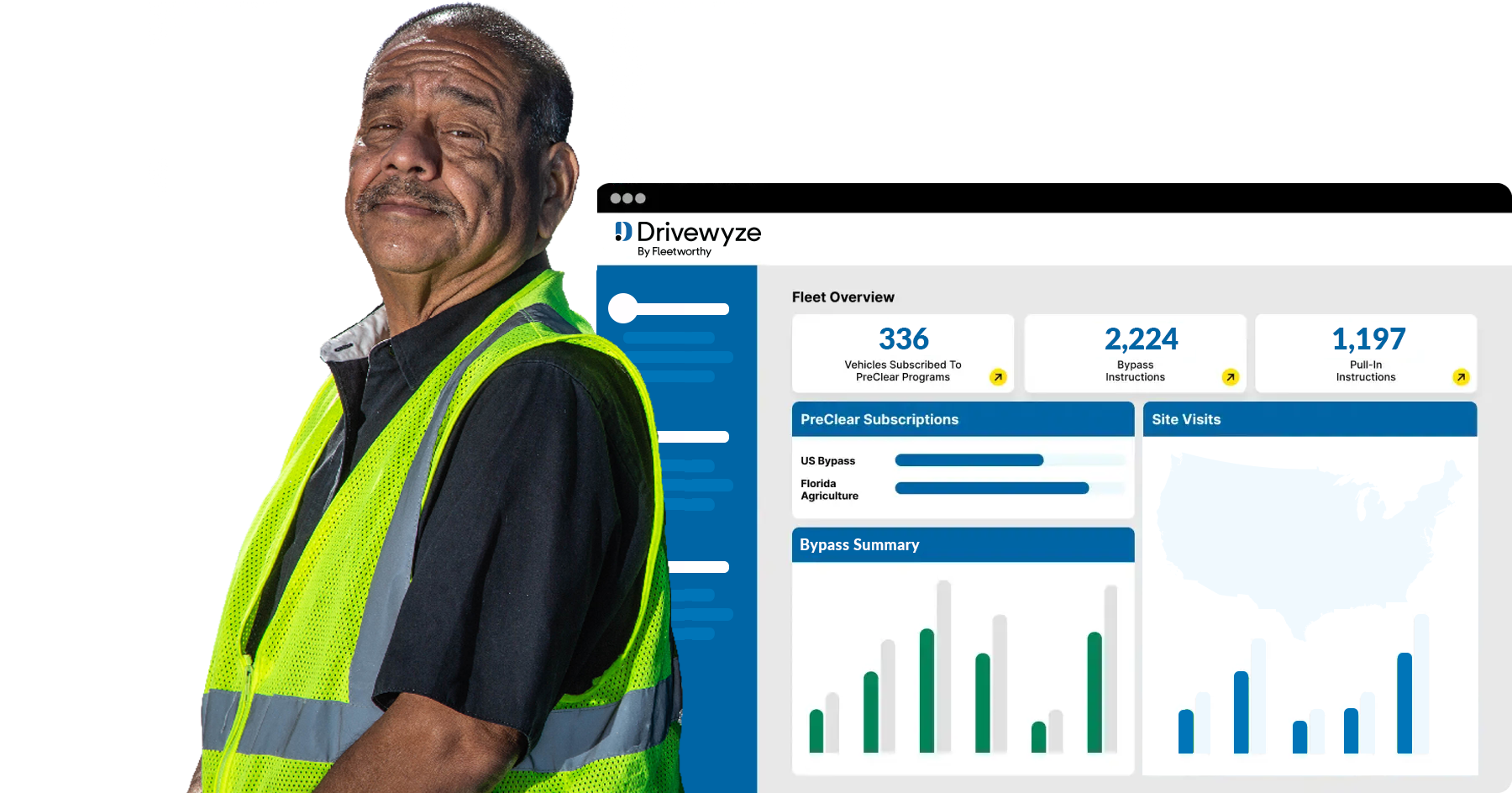
- Solutions like Drivewyze PreClear help trucks bypass weigh stations — reducing idle time, conserving fuel, and improving delivery times.
- Consider investing in GPS-based analytics, trailer skirts, tire pressure monitoring systems, and low-resistance tires for additional savings.

How Drivewyze Helps Fleets Improve MPG
Drivewyze isn’t just about compliance and safety — it’s also a strategic partner in helping fleets operate more efficiently and reduce operating costs. Several Drivewyze solutions directly or indirectly contribute to better fuel economy by minimizing idle time, streamlining routes, and promoting fuel-smart driving behaviors. Here’s how:
Drivewyze PreClear: Cut Idling, Save Fuel at Scale
What it does: PreClear allows eligible trucks to bypass weigh stations and inspection sites using mobile-based bypass technology.
How it helps fuel economy:
- Reduces unnecessary stops and long idling times at weigh stations
- Maintains route momentum and avoids fuel-wasting acceleration from a complete stop
- Supports route efficiency by eliminating detours to weigh station ramps
Result: Fleets using PreClear can reduce fuel usage by hundreds of gallons per truck annually — savings that scale quickly across large operations.
Drivewyze Safety+: Coach Drivers in Real-Time to Improve Efficiency
What it does: Safety+ provides in-cab, location-based alerts and post-trip driver safety insights.
How it helps fuel economy:
- Delivers real-time alerts for speed limit reductions, high-risk curves, and known problem zones
- Promotes smoother acceleration and braking through proactive warnings
- Enables behavior-based coaching that helps drivers curb fuel-wasting habits like speeding and excessive idling
Result: Fleets see a measurable improvement in driver behavior, contributing to better MPG and lower maintenance costs.
Ready to Take Control of Rising Fuel Costs and Optimize your Fleet’s Performance?
When fuel costs are this volatile, operational efficiency is no longer a “nice to have” — it’s a competitive advantage. Drivewyze helps fleets unlock that advantage by giving drivers and managers the tools to improve MPG without disrupting workflows or requiring costly installations.
Join thousands of fleets across North America already leveraging Drivewyze’s software-first solutions to streamline infrastructure interactions, improve driver habits, and conserve fuel. Contact us today for a demo and start saving more with every mile driven.


Ready to Get Started?
Learn how North America’s leading carriers use Drivewyze to save money and improve safety.